18 Aug 2026
The Hidden Patterns in Multiplier Mechanics Across Cluster-Pay Designs in Games Featuring Deities, Fruits, and Fishing Adventures
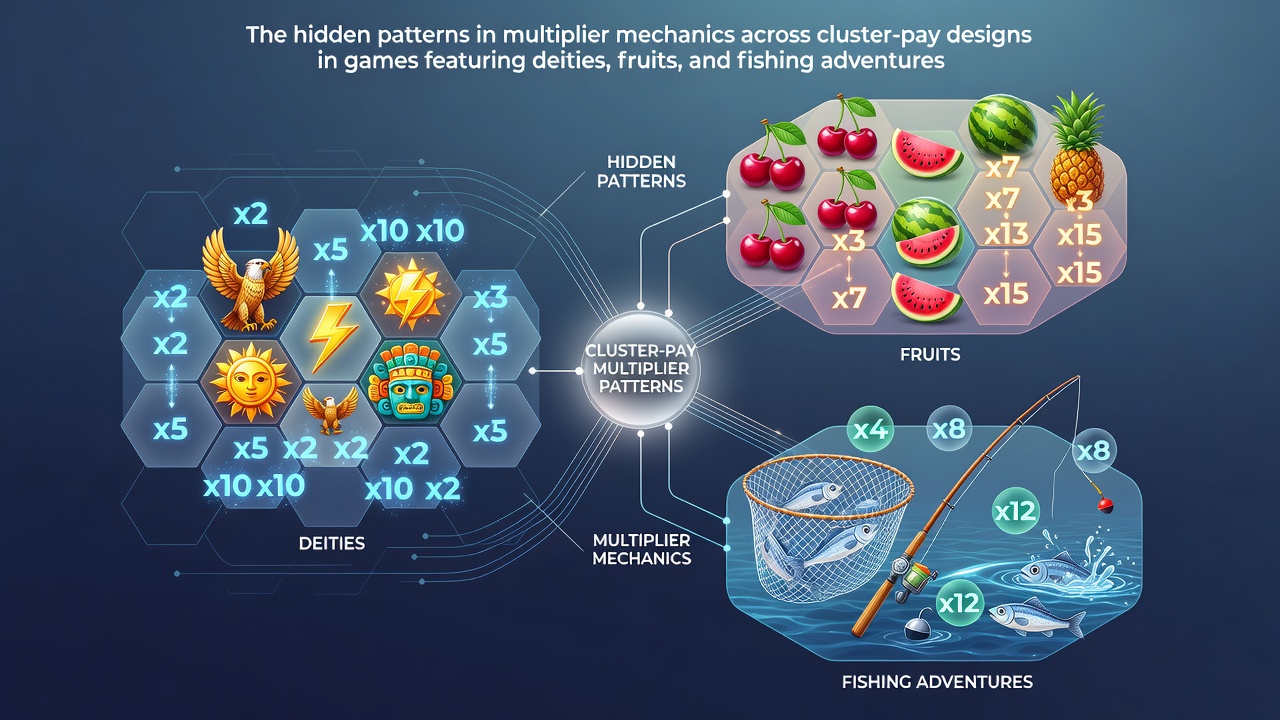
Cluster-pay designs operate through symbol groupings rather than traditional paylines, and researchers have tracked consistent multiplier behaviors that emerge when clusters reach specific sizes across themed releases. These patterns appear in titles centered on deities, classic fruit symbols, and fishing scenarios where collection mechanics interact with cluster thresholds. Data from industry tracking shows that multipliers often scale with cluster adjacency rules while incorporating theme-specific modifiers that activate during consecutive spins.
Core Mechanics in Cluster-Pay Systems
Cluster formation requires a minimum number of matching symbols in connected positions, and this base requirement shifts the way multipliers apply compared to line-based slots. Observers note that once clusters exceed the minimum, additional symbols trigger layered multipliers that compound through successive cascades. Those who analyze payout distributions find that deity-themed games frequently embed higher base multipliers on divine symbols, whereas fruit-based designs rely on simpler incremental boosts tied directly to cluster volume. Fishing adventures integrate collection meters that feed into multipliers only after specific cluster events occur, creating delayed activation sequences documented in multiple software provider logs.
Multiplier Scaling Across Thematic Categories
Deity games display patterns where multipliers increase when clusters form around central character symbols, and these increases follow predictable ratios tied to the number of surrounding matches. Fruit slots exhibit steadier progression where each additional fruit in a cluster adds a fixed multiplier increment without requiring special positioning. Fishing titles combine both approaches by awarding base cluster multipliers while separate fish symbols contribute extra values that accumulate only during cascade sequences. Research indicates these differences produce distinct volatility profiles even when the underlying cluster detection algorithms remain identical.
Deity-Themed Implementations
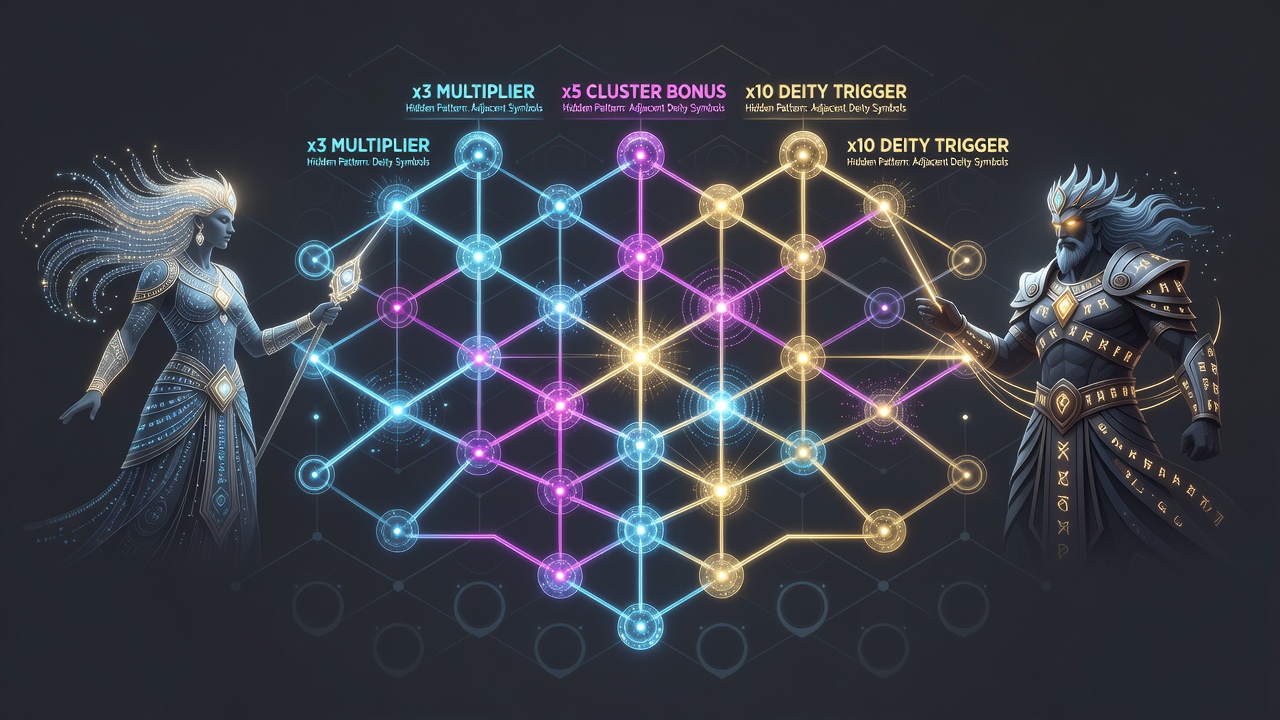
Games featuring mythological figures apply multipliers through symbol hierarchies where higher-tier deities carry inherent multiplier values that activate upon cluster completion. Additional modifiers appear when cascades continue, allowing multipliers to stack across multiple drops within a single spin sequence. Analysts have recorded that certain deity titles reserve their largest multipliers for clusters that include wild substitutions, producing outcome distributions that differ measurably from non-wild clusters.
Fruit Symbol Patterns and Fishing Collection Interactions
Classic fruit symbols maintain simpler multiplier logic where cluster size directly determines the applied multiplier without secondary conditions. Yet fruit designs occasionally introduce mystery symbols that convert into multiplier-bearing fruits after cluster formation, adding an extra layer visible in payout audits. Fishing mechanics diverge by requiring players to gather symbols that later convert into multiplier additions during free spin rounds or bonus features. Reports from regulatory bodies in Ontario and Australia confirm that these collection systems create measurable differences in average multiplier values per spin when compared against deity and fruit categories.
Observed Patterns in August 2026 Data Releases
Tracking conducted through mid-2026 reveals that cluster-pay titles across all three themes continue to refine multiplier visibility through on-screen indicators that highlight potential escalation paths. Software updates have introduced conditional multipliers that activate only when clusters form in specific reel zones, and these changes appear most frequently in fishing adventures. Deity games have incorporated progressive multipliers that carry between spins under defined conditions, while fruit slots retain static scaling that prioritizes predictability. Figures released by the Canadian Gaming Association and the National Council on Problem Gambling show that these mechanical adjustments influence session length metrics across player segments.
Comparative Analysis of Activation Triggers
Activation thresholds differ by theme even when cluster sizes remain constant, and experts have mapped how deity titles favor position-based triggers while fishing games emphasize symbol type accumulation. Fruit implementations sit between these approaches with size-only triggers that rarely incorporate positional requirements. Studies conducted by academic groups examining game mathematics demonstrate that these trigger variations produce distinct hit frequency curves, and the differences persist across multiple software providers operating in regulated markets.
Conclusion
Multiplier patterns in cluster-pay designs maintain clear thematic distinctions that affect both activation frequency and value scaling. Deity, fruit, and fishing categories each apply unique rules that interact with core cluster detection, and ongoing data collection continues to document these relationships across regulated jurisdictions. The mechanical variations produce measurable differences in outcome distributions that players encounter during extended sessions.